All Activity
- Yesterday
-
Interesting indeed.
- Last week
-
An interesting show to say the least. Very interesting a lot of their pullups are designed as incognito outer wear too. https://m.youtube.com/watch?v=Ye3dtN1NQ1k
-
I just talked to the floor manager/advocate. Apparently their hospital network, Ascention, has a new policy for incontinent patients. They have implemented a "minimal layers" approach. Which favors having absolutely nothing against the skin, and letting an absorbent bed mat absorb the urine. Another option they have is to use a condom catheter. Though as most of us know, they are not reliable and come with enough problems of their own. I showed my diaper to her (Betterdry), and explained the necessity of a non-absorbent acquisition layer, Thicker padding that can wick urine away, and SAP that locks wetness away. I also explained the cost and time savings with using better diapers. And lastly asked her pass it along to the higher ups and to at least push for a trial run to better test them on other patients. Hopefully that will be the start of better patient care, but in the mean time everyone will need to bring their own diapers.
-
It seems like my surgery went about as expected. I'm already in a room, trying to manage the pain. And go figure, I'm on a "no diapers" floor. The nurse wanted to do just chux pads but I told her no way in heck that is happening. I'm so glad I brought my own diapers and insisted I will be using them. I'll need to talk to a patient advocate about the no diapers policy too. That's borderline discrimination against my medical disability. Not to mention incredibly undignified.
-

Inpatient Hospital Stays with incontinence
Valentinesstuff replied to Slomo's topic in General Topics
Best of luck with the surgery. -
Resurrecting my old thread. Almost 2 years and I'm now headed for another hospital stay. Oddly, for the same right knee joint replacement (the old one needs a revision due to failed ligaments). Being urinary incontinent I'll be in a diaper the entire time. I already know they won't have half-decent diapers to provide for me, so I'm bringing my own Betterdry diapers with me.
- Earlier
-
Bummer. Yeah, that's been my experience too. I can get them, but they're all so cheap I'd rather buy my own. I'm still hoping someone out there has managed to get half-decent diapers from the east coast VA. Anyone?
-
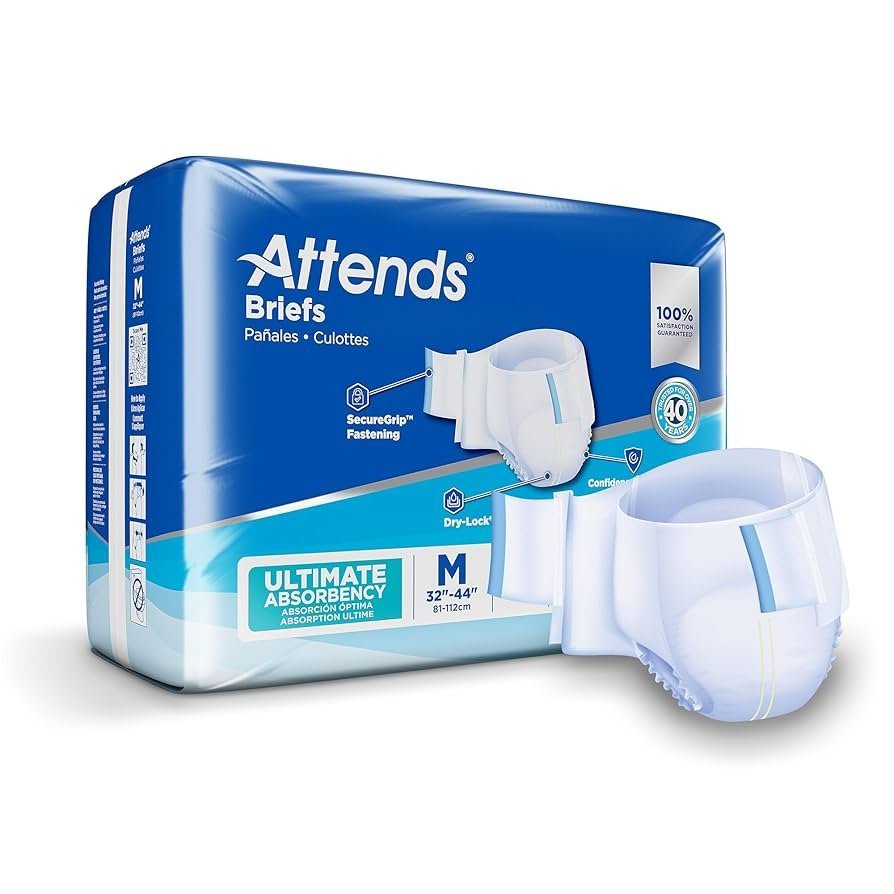
Attends Ultimate Useless Diaper. https://www.healthykin.com//p-5200-attends-ultimate-absorbency-briefs.aspx?gad_source=1&gad_campaignid=20756320035&gbraid=0AAAAADw-o9YxuxGfuLJp84nKsWDtdS7aM&gclid=CjwKCAjwprjDBhBTEiwA1m1d0q1brzduWtmcAXJvAdTmsmBLe6A8QxjAfsEu7BlpL8o68oHiAS2pGxoC14AQAvD_BwE Admittedly that is the cheapest I saw with a quick search. Yes they have one giant "tape," they are hook and loop. The machine that folds in the side panels is so inconsistent that it is difficult to tell if it is fully unfolded. The single tape is nigh impossible to get fitted correctly and after a couple of hours it is literally falling off your body. They might work on comatose dehydrated patients, but I would not put money on that.

-
Awesome, and what brand were you able to get? Something at least like Molicare or Seni? And dare I hope it's Megamax or Betterdry?
-
I saw the Therapist, and it went well. Most of it was a discussion of the whats, wheres, whys, and hows of fecal incontinence and mine specifically. She showed me anatomical models of how the various muscles work, apologizing about half the time that the model was for a woman. I was surprised to find that pelvic floor muscles and the abdominal wall muscles work together. She explained a few things, like while holding your breath intrinsically weakens your pelvic floor muscles. She did a similar exam to the manometry, although not as invasive. She agreed with the previous diagnosis of general weakening of the pelvic floor muscles, especially for long durations. There is really only one exercise to do, but I'm supposed to do it in all different positions. Standing, sitting, walking, laying down, whatever. The hard part is tightening it for any duration and breathing normally. I have three or four more appointments over the next few months. Turns out I was sent an old questionnaire to fill out. The therapist kind of sighed and said she could work with it.
-
I'm in the Midwest, Central Illinois.
-
Just to confirm, you're on the east coast correct? And you are talking about having better diaper than the useless crap, correct? I do know the west coast va has a different contract/supplier, which allows for special or drop orders. No such luck on the east coast, where I can get diapers, but they're all useless.
-
My problem is that I don't even know who to talk to. My Dr is new to the system, some nurse from another team managed to get me the Stands Ultimately Useless Briefs that I have. I wonder if Patient Advocacy could help. I am half tempted to write my Congressman or Senators.
-
Just bumping this thread as I'm still hoping someone out there has a tip or trick to get decent diapers through the east coast VA. Heck, I'd be willing to hold my breath till I get them- if I thought it would work.
-
 Sudocreme is mostly zinc, lanolin and benzoyl alcohol. Which is good for absorbing into the skin to heal damage. It looks like the midline is predominantly Silicone and other extracts. Which actually makes it an ointment that is good for forming a protective barrier, which protects from additional damage. Using any cream first, followed by an ointment, is a proven way to heal rashes extremely well.
 -
I've got to admit, this isn't overly expensive, and is the first one I've seen that differentiates wetness level too. Interesting they don't tell you how much the single-use strips cost though.
-
https://buy.senecasense.com/starterkit/optin
-
From a quick Google search, they appear to be different.
-
 Hi all I am wondering if Medline® Remedy Clinical Silicone Cream and Sudocreme are identical products as my ex continence nurse put both down in my continence report? I am looking for peoples personal input and will ask my Urology nurse and Continence Nurse (when I find a new continence nurse) Thank you
 -
There is 1 or 2 of them, but from what I recall they are fairly expensive, must be paired with a smartphone via an app, and are no good for indicating how wet you are (only if you are or not). Which means they aren't any good for telling you when you should change either. They're really intended for institutions with the mentally disabled or physically incapacitated. I personally wouldn't bother with them if I were you. I find a quick and discrete pinch to the seat of your diaper is a good way to tell how wet you are and how long before you'll need to change. It's just a matter of making it a habit, which would be hindered if you're also using a sensor. If your real worry is leaks then you'll be better off using a decent diaper (never ever use anything store bought unless you have minor or occasion stress leaks). I personally recommend Betterdry (or Crinklz of you want fun prints), which is cheaper than Depends on a per-day basis, and way more reliable/comfortable. Everyone is different though, so expect you'll need to test out a few different brands before you'll find the right one. And with any diaper, pair it with a Gary Activewear PUL pant. They are real savers for discretness and containing leaks while helping you to notice them right away. Lastly, make sure to read up on the other threads here. They are packed with excellent tips, tricks, and lessons learned.
-
Hi all Any one know of any Diaper sensors on the market that can be used on any diaper? As this seems interesting as I am not sure when to change due to being new (Since November) 100% medical induced Urinary Incontinent Thanks
-
I'm sure you already know it's important to dry your skin out. I recommend at least once daily to ward off rashes. I've found laying on my bed under the ceiling fan can accomplish this in under 5 minutes. For really short stints, like lying in bed for 5 min, a baby diaper works great for absorbing dribbles. Just wrap it over your...member, and you're good. It also works great for in/out of a shower, in between changes, and as a booster for when your diaper needs an extra hour or two of capacity. Though I recommend removing the tabs for added comfort when using them as a booster (it's incredibly easy to remove them too). Ps. I've found they have the absolute best absorbency per price compared to any other booster too.
-
 pat joined the community
 -
As I get older post-void-dribbling is becoming an issue. Luckily I am always in some level of protection, but it means not being completey dry most of the time. Any tips?
-
Resurrecting my old thread. My right knee has failed again, and it's back to hurting with instability. I've been following up with my old surgeon and he referred me to another specialist that does revisions. This one is going to rip out my old knee and put in an upgrade. I'm already scheduled for it in July, and of course will be bringing my own diapers with me.
-
 Tommyvoits joined the community
 -
Been there, done that. 1 being no control through 10 being full control, right? Look at it like this. Out of every 10 days, how many days do you have even minor bowel problems. That number is your 1-10.